
If you’ve started thinking seriously about clearing your debt, you’ve probably heard this question:
Should I use the Debt Snowball or the Debt Avalanche?
People argue strongly about both. Some say Snowball is emotional and inefficient. Others say Avalanche is logical but hard to stick to.
The truth is simpler than the debate. The best method isn’t the one that saves the most money. It’s the one you will follow consistently.
Let’s break both down clearly.
What Is the Debt Snowball Method?
The Debt Snowball focuses on smallest balance first.
Here’s how it works:
- List all debts from smallest to largest (ignore interest rates).
- Pay minimum payments on everything.
- Put all extra money toward the smallest debt.
- Once it’s cleared, roll that payment into the next one.
Each time you eliminate a debt, your payment power grows, like a snowball rolling downhill.
Why People Love It
• You see quick wins
• It builds motivation
• You reduce the number of accounts fast
Clearing your first small debt can create psychological momentum. And momentum matters more than math for many people.
What Is the Debt Avalanche Method?
The Debt Avalanche focuses on highest interest rate first.
Here’s how it works:
- List debts from highest interest to lowest.
- Pay minimums on all.
- Put extra money toward the highest interest debt.
- Once cleared, move to the next highest.
Why It Makes Sense
• You pay less interest long term
• You clear expensive debt first
• It’s mathematically optimal
If you stick with it consistently, Avalanche usually saves more money.
Example: Snowball vs Avalanche
Imagine you owe:
• $500 credit card (18%)
• $2,000 personal loan (10%)
• $8,000 car loan (6%)
Snowball would clear the smallest amount first, which in this case is the credit card of $500.
Avalanche would attack the 18% credit card first (same in this case).
But imagine instead:
• $500 loan at 6%
• $2,000 credit card at 20%
Snowball clears the $500 first. Avalanche attacks the 20% card first.
Avalanche saves more interest.
Snowball gives faster emotional wins.
Which One Is Better?
Here’s the honest answer:
If you struggle with motivation → Snowball often works better.
If you’re disciplined and numbers-driven → Avalanche may be stronger.
Debt payoff is not just mathematical. It’s behavioural. Consistency beats optimisation.
A “perfect” method that you abandon in 3 months is worse than a “less efficient” method you follow for 18 months.
The Real Reason People Fail at Both
Most people don’t fail because they chose the wrong method. They fail because:
• They don’t track monthly
• They switch strategies mid-way
• They don’t know their real budget
• They stop reviewing progress
Before choosing a method, you must first know:
• Your total debt amount
• Your minimum monthly obligations
• Your extra payment capacity
If you’re still unclear about your monthly structure, start here:
Related read: How to Budget When You Live Paycheck to Paycheck
How to Choose Your Strategy Today
Ask yourself:
- Do I need quick motivation? → Choose Snowball.
- Do I care deeply about minimising interest? → Choose Avalanche.
- Am I likely to switch if I get discouraged? → Snowball may protect you.
Then commit for at least 90 days. No switching. No overthinking.
Just consistent execution.
Track Your Progress Properly
Regardless of which method you choose, tracking is essential.
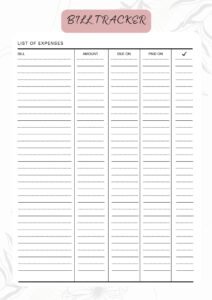
It helps you list debts clearly and see what’s due each month.
If you prefer a structured spreadsheet that:
• Calculates Snowball and Avalanche automatically
• Shows your projected debt-free date
• Tracks total interest impact
• Updates monthly progress
You can use the Debt Snowball & Bill Control System
Clarity creates control. Control creates momentum. Momentum clears debt.
Final Thought
There is no “perfect” debt strategy. There is only the strategy you follow consistently. Choose one. Track weekly. Stay structured.
And keep moving forward.